

In this day and age, with access to technology and curriculum at our fingertips, it can be very overwhelming to decide what actually to use in the classroom.
There are many great ideas for routines and curricula that can be incorporated into your classroom, such as daily activities that build student skills and empower them as they grow. However, the common thread between every possible instructional piece is that it eats up your time. Time is a genuine and valuable real estate when it comes to teaching.
Our teachers’ job is to exercise discernment in how we invest our class time.
As a new teacher, I dabbled in various activities to start our day, from DEAR time to STEM bins, Chromebook online practice, and pencil and paper morning work. Each one had its own advantages, but today, I want to focus on the understated value of the traditional morning work route.
When it comes to morning work, there are tons of options out there. However, if you aren’t careful, it can quickly become a money pit. Over the years, I’ve invested way more money than I should have, trying to find the perfect morning work that suited my needs.
Luckily for you, I’ve created a fourth-grade year-long set of math morning work and would love to share a sample of it with you for FREE so you can try it out and see what a great fit it is for your classroom! You can click HERE to get access to your first week here!
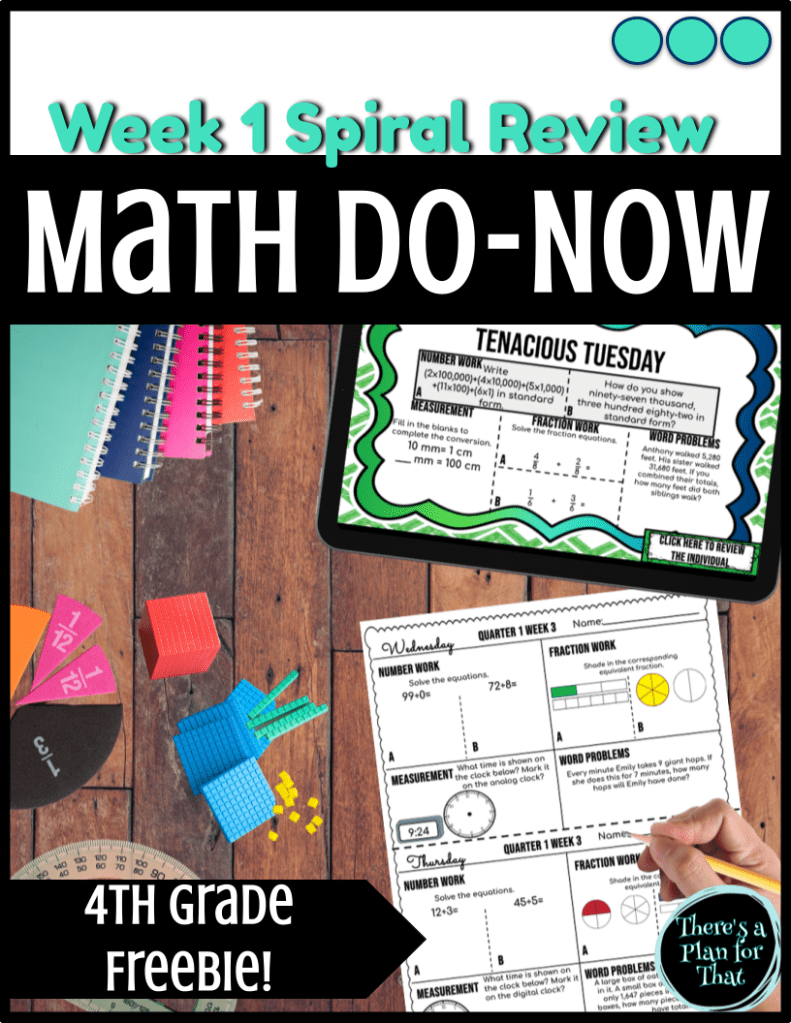
When choosing morning work, there are several important factors to consider.
- What is the amount of work expected in one time period?
- Is it standards-aligned?
- Is it rigorous?
- How are the concepts introduced? Does it spiral review throughout the year, or are concepts only touched upon once?
- Is the format and layout consistent throughout the weeks?
Let’s take a deep dive at each of these points to explore what they mean!
- When you consider the amount of work expected to be completed, you want to factor in that this is morning work. Often, this means that it’s being completed as students are trickling in. You want to find a balance of assignments that are long enough to require some focus and attention but also short enough that a majority of your students should have had enough time to complete them.
I’ve found the upper elementary sweet spot to be between 4 and 6 problems. I would steer clear of anything longer than ten questions.
- This next point is a big deal and a hot topic in education. Is the resource aligned to state standards?
You’ll find there is much debate about “teaching to a test” and whether we should only teach what is on the state standards because it helps ensure student success on state testing or whether we should broaden our approach to how and when we teach concepts and ideas to adhere less rigidly to specific standards. That, however, is a conversation for a completely different blog post.
When considering choosing excellent morning work, we want it to be standards-aligned because this is a powerful tool to ensure standards mastery by the end of the year. We can prioritize this time in the morning for morning work because we’re front-loading and revisiting concepts to keep them relevant and fresh in our students’ minds throughout the school year.
I have made the mistake of purchasing morning work products that didn’t fit our state standards. I spent so much extra time teaching how to do problems that my students didn’t need to know how to do yet. It didn’t help them master the concepts they needed to master; instead, it stole from the time I could have been using to strengthen them.
Make sure the morning work is a good fit for your state standards— brownie points if you can find one that provides the specific standards being reviewed each week! It will help you look like a rockstar teacher to administration if you can quickly identify which skills and standards are being practiced each week!
- This new point ties in similarly to standards alignment, but are the questions and skills rigorous?
Your goal for the morning work should be a mix of understanding and growth points for your students. If it’s too easy, then your students will not grow academically from this time. Likewise, they will not be helpful if it’s too complicated and they are overwhelmed by all the problems.
I like looking for morning work that combines number work (straightforward equations or comparing and ordering numbers) and word problems. We know that skills in isolation are easier for students than word problems because word problems assess whether a student can perform the operation and whether they recognize which operation needs to be used. A mix of both helps strengthen the core skills of your operations and the confidence students will have to identify them in the context of a word problem.
- When choosing morning work, the next element is whether the content is introduced and reviewed by the unit or if it’s a spiral review.
If you haven’t heard of the term spiral review, skills are brought up multiple times throughout the year, so you may do something for two weeks in quarter one and then return to the skill again in quarter two.
The advantage of a spiral review is that it helps prevent students from forgetting concepts taught at the beginning of the year and then only looking at them again at the end of the school year. The disadvantage is that often, there isn’t enough time for complete mastery in a spiral review, so some students may not have fully figured out what they’re doing before the next concept is introduced because the pacing is faster.
Since we’re focused on morning work rather than a complete curriculum lesson, not having total mastery is less of an issue. The actual mastery is taught during regular class time, not during this short period at the start of your class.
My preference for ideal morning work is a spiral review-based product because it allows students to engage in skills multiple times throughout the year to help them retain the information. More review throughout the year translates to a less frantic end-of-year review before testing.
- The last part may sound finicky, but you should look at how predictable the layout is.
When introducing a new worksheet or curriculum piece, there is a period where you have to explain to your students how to understand the layout and what it wants you to do. This explanation takes up time you could be spending on academic conversations and learning. By making sure you’re choosing a piece with a familiar layout, you help cut down on those conversations. If there is a box for a word problem each day, then your students KNOW to look for a word problem in that box. The type of word problem may change, but the expectation of having one remains constant throughout the year.
I wanted to avoid investing money into a morning work piece my first year, but I wanted students to have that practice time. What resulted was a nightmare where every day I spent trying to explain the expectations for the paper (not explaining the skill, but the directions themselves.) Once the students finally began to feel comfortable with that worksheet, the freebie would be out, and I would have hunted down the next great free deal, and the cycle would continue. So much time was wasted, and frustration was felt by both my students and me as an educator.
There are times when your time and sanity are worth a few dollars being invested; this was very much one of those times.
The predictability of the layout and types of questions to expect may also be helpful for students who have academic anxiety because the routine takes some of the stress out of it.
Kids THRIVE on routine, so having consistency will be a game-changer in your classroom.
Today, we’ve discussed what to look for in a quality morning work curriculum. My goal for you is that you walk away feeling empowered to start a morning work routine and confident that you’ve found the ideal curriculum to meet your student’s needs.
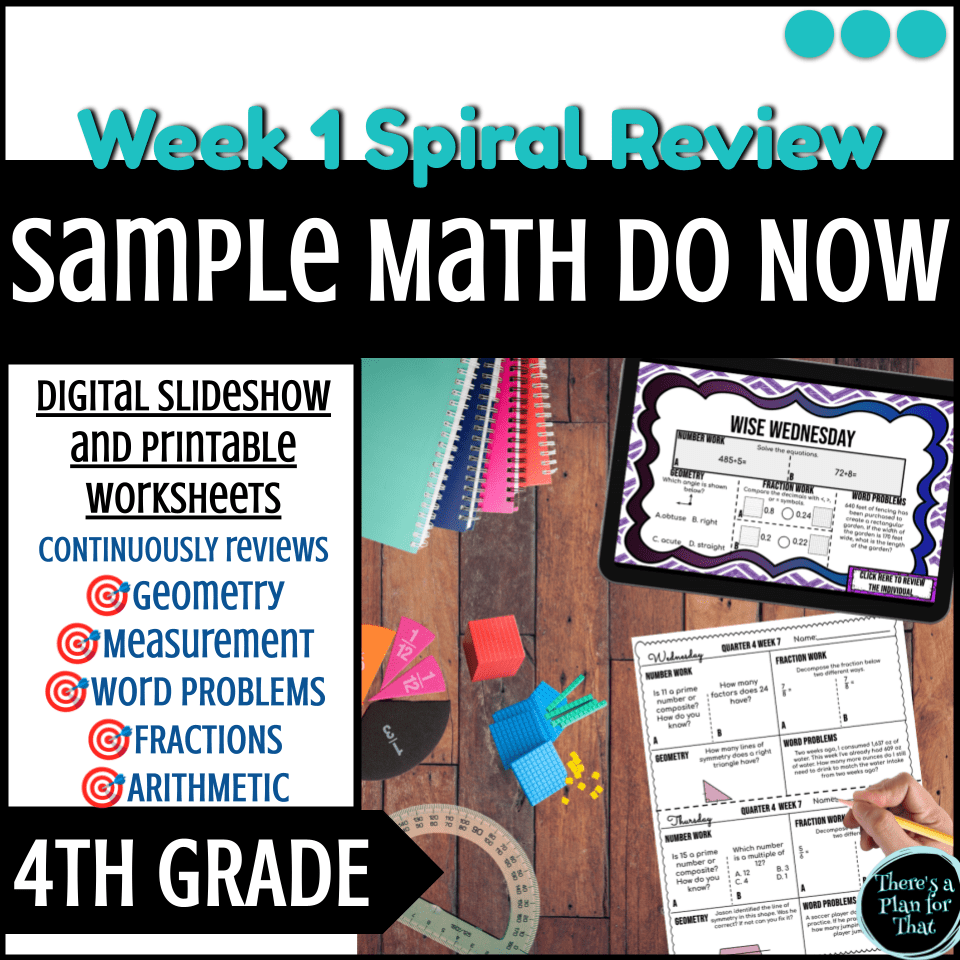
Remember, fourth-grade teachers, I’ve got you covered with ready-made morning work, a year-long curriculum designed to meet all your anticipated needs. If you haven’t already done so, don’t forget to join my email list and get your FREE First Weeks’ Morning Work to try it out!

 There's a Plan for That
Leave a comment