

With the end almost in sight, we’ve hit the time of year when teachers and students are stressed! It’s time to begin the end-of-year review period, during which we teachers try to cram every last bit of knowledge into the student’s heads in hopes that they will retain it all.
Unfortunately, this time of year is also a time for student burnout. Too often, we, as teachers, print out multiple-choice tests, ask students to work on them, and then correct the answers. I understand why this is the go-to, especially with the length of most end-of-year testing being significant. We want to ensure that testing stamina has been developed and built up in our scholars. If they have only ever taken a 45-minute long assessment, and then at the end of the year need to be able to complete a 2-hour long assessment, they will have brain fatigue long before they make it to the end of the test.
We must focus on striking a balance with how we review at the end of the year to ensure that while testing stamina is being developed, we are still engaging and fun with how we present the materials. Remember, the goal is to use this as a time to refresh our scholar’s minds on some of the standards that may have been forgotten earlier in the year. This isn’t the time we are teaching things from scratch because, at this point, this close to the test, there is little time left to introduce new ideas enough for them to be developed concretely.
Today, we are going to talk about 5 of my favorite ways to prepare for end-of-year testing. These strategies are designed to make the review process more engaging and effective, helping students retain the knowledge they’ve learned throughout the year. The nice thing about these strategies is that they are versatile, and you can use multiple resources to review using these strategies.
Our first two strategies will involve balloons. What could be more fun than adding balloons to the classroom? Especially as the end of the year approaches, let’s make our review reflect our preemptive celebration!
1. Balloon Decide
For the ‘Balloon Decide’ strategy, I choose a resource to review with my students; often, this is a released version of the end-of-year testing that the state has provided me. If you are an NC teacher, I use the released EOG, which you can access from this website. If the resource I’m using has 30 questions, I would blow up 30 balloons, and inside each, I would place a scrap of paper with the numbers 1-30 on it. Then, I would tape the balloons to the wall or the whiteboard. This strategy is a fun way to review, as it adds an element of surprise and competition to the process.
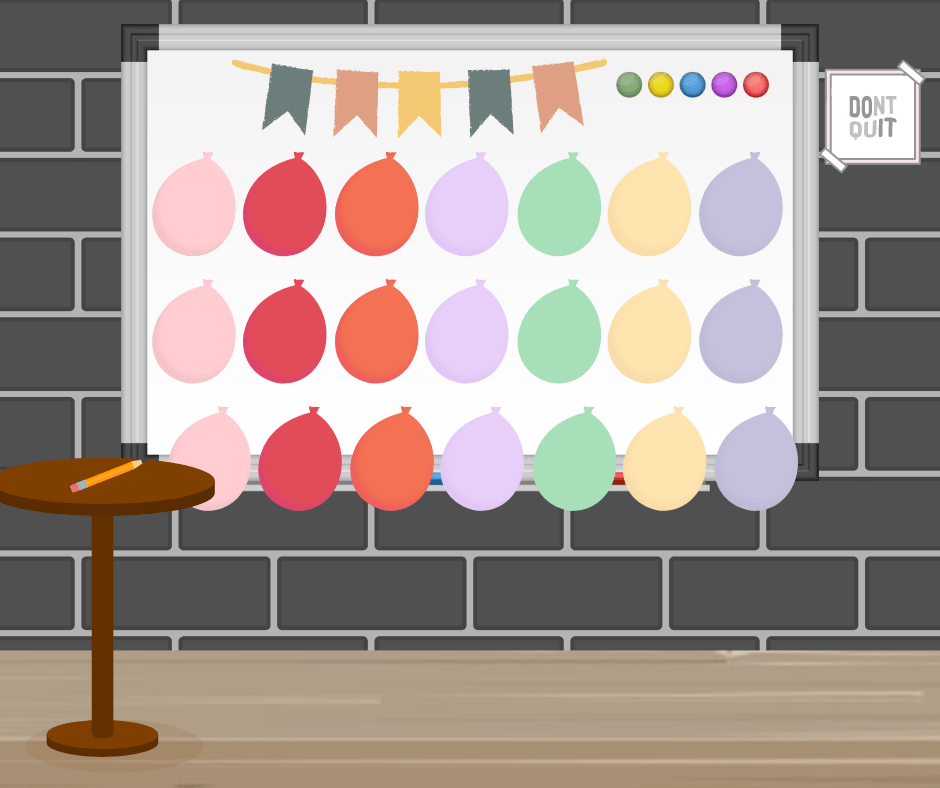
I would call on students at random and allow them to choose and pop a balloon. I have tried this with thumbtacks and safety pins, but the best way I’ve found for students to actually pop the balloons has been with a standard wooden pencil.
Once a balloon has been popped and the number inside has been revealed, we would all, as a class, flip to that question in our printout and would have independent work time. Then, once we had independent work time, I would give a minute of partner time where they discussed their answers with the person next to them, stating why they chose the answers they did and potentially convincing the other students of their way of thinking if the answer choices differed.
One guiding principle behind this conversation between partners was that if we didn’t know the answer, we should be working on talking about which answer choices we feel confident are incorrect and why.
Encouraging that line of discussion helps open the floor to all students to engage and facilitate deeper conversations rather than staying surface level if the students were blindly guessing. It also helps build the skill of eliminating the absolutely incorrect options to increase our odds of a correct answer, especially when we are unsure of how to fully get the correct answer.
Using the website wheel decide can be helpful for fairly selecting which student gets to pop a balloon next. It also allows you to avoid repeating students having a turn at popping the balloon. If the resource you’re reviewing is too lengthy to do in one sitting, you may spread this activity out over several days of class periods and only place a certain number of the questions up on the board at a time.
Trying to complete an entire 45-to-60-question resource using the balloons in one sitting can be extraordinarily difficult for students to maintain their engagement and focus. My favorite way to ensure the maximum benefit of the review is to break it down into smaller pieces.
2. Balloon Strategy Dump
Unlike the last activity, this second practice activity is more specific to math than it is to ELA. You will need a bag of balloons and a set of Sharpies for this activity. Students will need to be divided up into work groups. I’ve found groups of 4-6 being effective and four being preferred. The larger the group of students working, the more likely a student can try to fade into the background and opt out of participating.
On the board, you will put a math problem to be solved. It is the team’s job to solve the problem using as many different strategies as possible. Each strategy will be written out on the balloon with a Sharpie to showcase their thinking.
At the end of the work time, you, as the teacher, go around and have students share different strategies that they used.
Walking around and listening as your students work to get the maximum use out of this strategy can be helpful. You want to predetermine who will show off which strategy from the different groups to ensure they will be the most impactful and wisest use of sharing time.
The best part about the game is the prize for winning the round—the winning team gets to stomp all the other teams’ balloons until they pop and then has to clean up the scraps and throw them away. (Anyone who is bothered by the sound can step out if need be during this time.)
3. Bean Boozled Question Practice
For this game, I divided the class into two teams. As for supplies, I had a collection of bean-boozled beans for the students to eat, as well as two fly swatters.
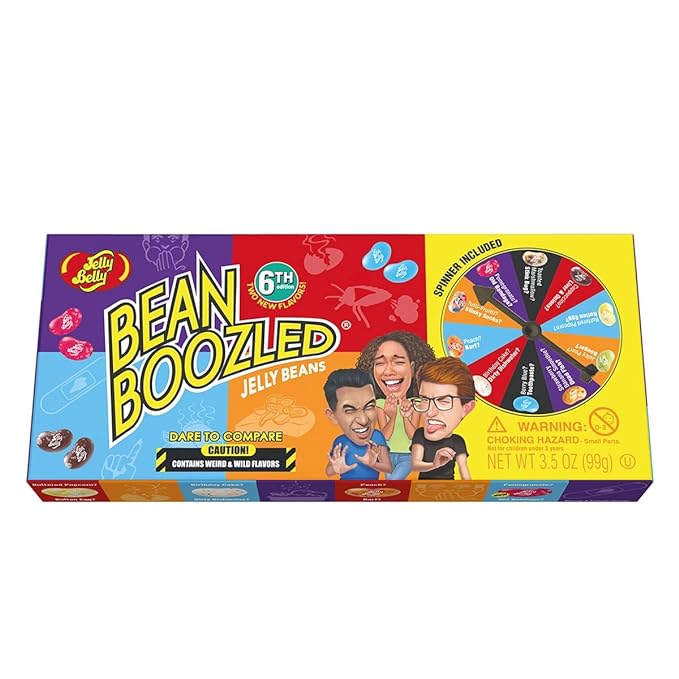
Students would stand in two lines. I would display a question on the board to be solved. The expectation is that EVERYONE in the class should work to solve the question. However, only the front person in line for each team can go up and “slap” the “buzzer” with their flyswatter. (The buzzer is a circle drawn on the board or on paper that says buzz.)
The first team to slap the buzzer gets to share its answer. If it is correct, the other team has to spin the bean-boozled spinner to see what bean they get to try.
(It can be useful to presort out the different bean options and have a good, safe serving glove on hand for getting the beans out. Having a trash can close by for the students who may want to spit out their flavor bean may also be helpful!)
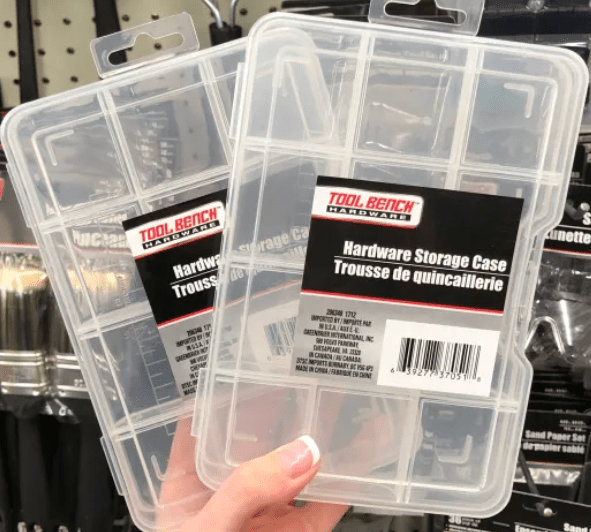
The Dollar Tree has some containers like the ones pictured above that can be useful when it comes to sorting and storing the beans from the Beanboozled game.
If the first person to the buzzer got their answer wrong, the second team gets to “steal” the answer. If the second team gets it correct, the initial team must eat the bean.
If both teams get the answer wrong, then both teams will eat a bean.
Before moving on to the next question, review how to solve the problem correctly so that all students understand and agree. Then, the line shifts up by one person, and the next question starts the new round.
You can choose whether you want points as the incentive for winning a round or a reward for not having to risk eating a nasty bean flavor.
Personally, I’ve found that using points can be helpful for classroom management. You can set a rule that if the students are talking when they aren’t supposed to or are talking beyond a certain volume level, then they are “giving” a point to the opposite team.
To keep full engagement, if one team starts to pull ahead, set it up so that the overall winner of the game is either the team with the greatest amount of points or the least amount of points and you won’t know for sure until the end of the game when you spin the wheel to find out. (If you’re looking for a wheel, you can use this one I’ve made here over on the website wheeldecide.com)
4. Classroom Vocabulary games based on the game Taboo
This game is initially designed for people to play. They are given a card with a word at the top that they want their team members to guess, along with a list of related words that the clue giver is not allowed to say either.
A member from the opposite game looks over their shoulder with a “buzzer” to keep the clue giver honest. They go through as many cards as possible while a timer ticks down their turn. Any cards with correctly guessed words go to the clue giver’s team; if any words on the don’t say list are mentioned, they result in points for the opposite team.
This game is a great way to help review academic vocabulary words that many have forgotten as the year has gone on.
The nice thing is that it can be done for any subject matter. I like to encourage my scholars to use their class notebooks while we’re playing this game to refer back to.
If you have the time, you can create your own deck using my free template in my Free Resource Library. Remember to sign up here for exclusive access to all the great resources in my Free Resource Library!
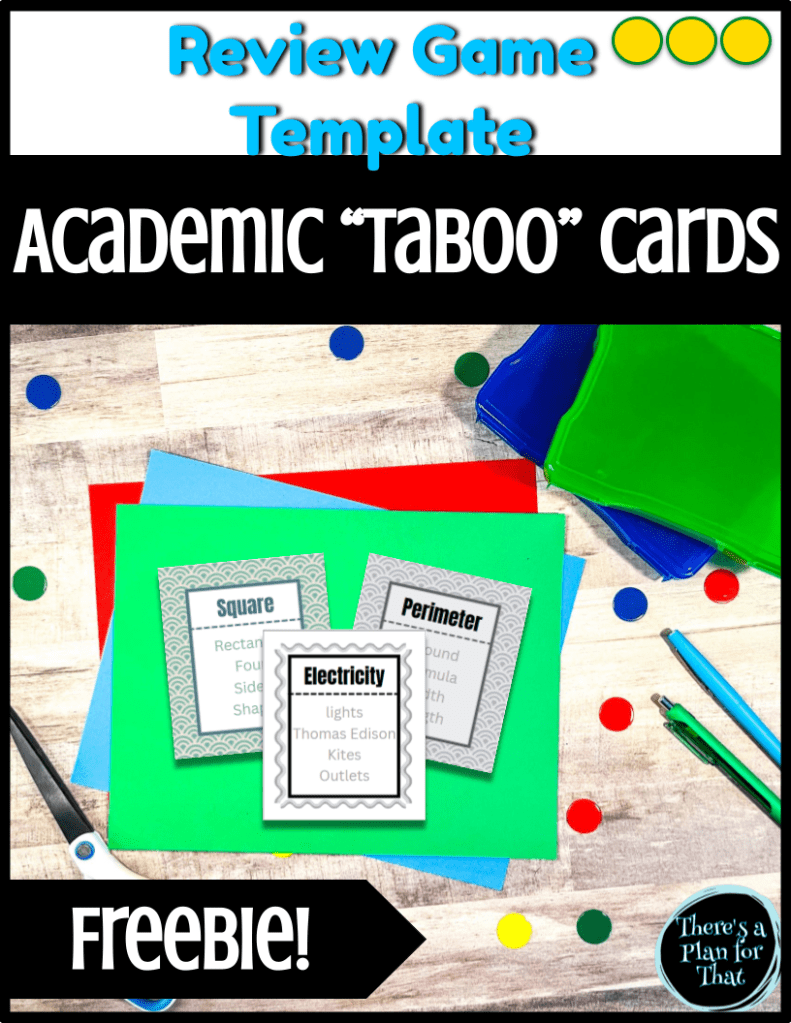
If you’re looking for some premade card suggestions, you can check out some of these great decks from TPT.
For math: Math Vocabulary Game – Editable by Schoolhouse Diva | TPT (teacherspayteachers.com)
For ELA: Off Limits Game (it’s just like Taboo) by Upper Grades Are Awesome (teacherspayteachers.com)
For Science: Elementary Science Taboo Game 100 Cards Classroom Ice Breaker Vocabulary Review (teacherspayteachers.com)
5. Interactive Digital Games
The last review activity that I love to use is interactive digital games! You can find them in my TPT store- There’s a Plan for That.
These games are perfect for an entire group to review specific skills that your scholars may need to work on.
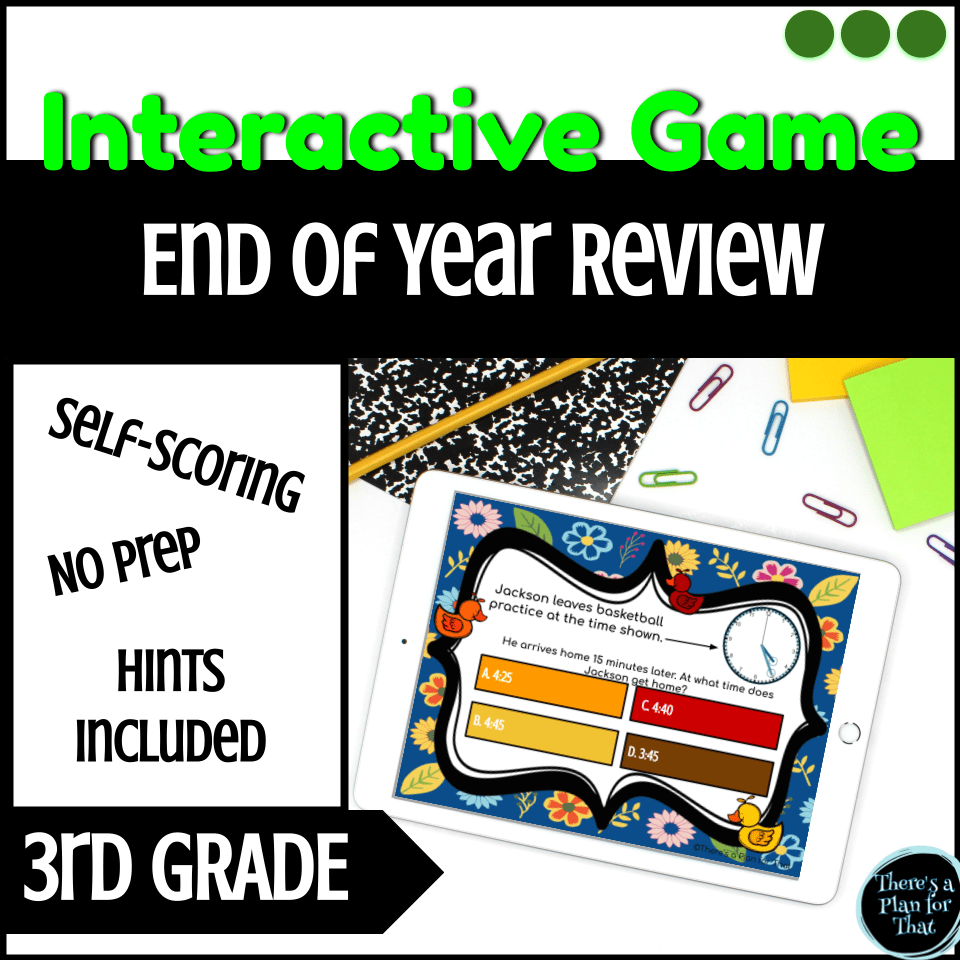
The best part about these games is the hints that have been embedded, so whenever the student gets the wrong answer, a hint can be provided to help jog their understanding.
The scores for this game also have an element of chance because students have to choose a lucky leaf (or duck, depending on the game) to reveal whether they have won or lost points with their correct answer.
The winning team either has the most or the fewest points at the end of the game, using wheeldecide.com, as I suggested earlier, with the bean-boozled activity.
If you’re interested in checking out those games, click this link to head over to my shop.
Hopefully, these games and activities have gotten your creative energy flowing! Remember, when it comes to end-of-year reviews, finding ways to make things fun or different can make a difference!
Sometimes, something as simple as reviewing the work outside using clipboards rather than in the classroom can be extraordinarily helpful.
Have any of these ideas I shared inspired you? I would love to hear about how they go for you! Go ahead and share it in the comment section below.

 There's a Plan for That
Leave a comment