
So, let me tell you a little story about a teacher who was given an enormous storage closet in her first classroom. This teacher tended to save everything. You never know when it might be helpful, right? Anytime an email came out to the school with a teacher looking for something, look no further—this teacher’s got it!
This sounds like the dream, right? It was, except when it came time to switch schools, I had to pack up my classroom… and rent a U-Haul to move all the stuff.
Was this teacher me? Absolutely.

While it was nice to be prepared, what I found when I was cleaning out my former classroom to move to my new school was that I honestly had so many things that I had forgotten about that I had ended up repurchasing the same things or using a similar item instead whenever I needed to use it again. Therefore, my space was full of duplicates, which added to the confusion of being unable to remember what I had– or, if I remembered that I had it, where to find it.
Today, we’re here to discuss some of the techniques I have learned since that point to help reduce the need to “keep” everything, but instead to focus on what items should be kept and which should be passed on or discarded after use.
What you’ll need:
A trash bag (or several), a donation box, and some uniform storage bins with matching lids. I personally like the sterilite containers that are around the size of a shoe box which you can pick up from Walmart, Target, or Dollar General (to name a few places). A pair of gloves can also be helpful if your sorting through a deep space, you never know what you will find whether it’s something sharp or something that has ceased to live (think spiders, and rodents).
- Existing items in that space
When I first got my classroom, the building was almost 20 years old, which means it was full of items that previous teachers in that room had left behind; either with good intentions or out of sheer laziness, I had a room that already was pretty well stocked. I know this is a blessing, and only some have that luxury. But suppose you’ve inherited a room with things in the storage spaces before you add anything of your own. In that case, you want to go through that and ensure you’re only keeping the things that make sense for YOU and have an inventory in your head of what you already have so that you don’t go out and purchase duplicates.
As you’re going through this stuff, I want you to ask yourself:
- Do I see myself using it immediately?
- Keep it!
- If not, when would I use it?
- If you don’t have a solid answer to this question, you should probably eliminate the item. “Maybe someday” translates to never 99% of the time. Ask me how I know… 🙃
- How difficult would it be to replace or borrow it from someone else if I needed to?
- I inherited a bin of dried rice when I first got to my classroom. I kept it at the time because the hoarder in me was in control. But honestly, it was a waste of space. I’m pretty sure the original purpose was for the measurement unit, but I didn’t need it. And if I change my mind, I can pick up a 2 lb bag of rice at the dollar tree. Or I could ask my colleagues; a science teacher would likely have rice or something similar in their room.
- How old is this curriculum piece? Does it align with the current state standards?
- If you can’t use it directly to teach your kiddos, it will just eat up your space and be stored indefinitely while you default to materials that align directly with what you’re teaching. Could they be adapted to suit your needs? Sure, but your time is precious when you’re teaching, and very rarely will you have the energy to spend it on that task.
- If this doesn’t work for my space, is there another space that would be a better fit?
- When I inherited my room, I had a huge box full of binders. As a fourth-grade teacher, my students had very little need for binders. Do you know who needed them? The middle school teachers in the other hallway were assigned quarterly projects. I could have sent out an email and offered them to the teachers who could really use them rather than letting them collect dust in my space.
- Is this a required staple piece for my classroom?
- Some schools mandate specific items be kept or displayed in alignment with school-wide practices. I would ask the administration at the beginning if there are any required pieces you need to keep in mind as you settle into your room.
Some things you come across are trash; they may need to be fixed or have stopped working. I found documentation from a lawsuit that was taken against one of the former teachers (it was not school-related; it was an incident involving a dog) stashed inside the corner of my closet. This was clearly trash, as the paper was 15 years old.
Check your consumable resources, like markers, pens, and glue sticks. These can quickly multiply, and you’ll feel like you have a lot. But when you use them, if they’ve sat for a long time, they tend to dry out and not work well any longer.
- Clutter attracts clutter (you need containment systems)
You don’t want to keep everything out on a shelf flat. If you do that, your brain will see that it’s an easy place to dump things because there are already so many things out. Investing in some containment systems can be very useful for your space. You can find a wide range of containers. I would advise starting at the Target/Walmart container level rather than the Dollar Tree level. You don’t want to sell off a kidney to afford your containers, but purchasing the cheapest one you can find typically means it will break, and you’ll need to repurchase shortly, which ultimately is a waste of money.
One item you may want to consider is how you plan on storing specialty paper, including card stock, different-colored construction paper, and large-sized construction paper.
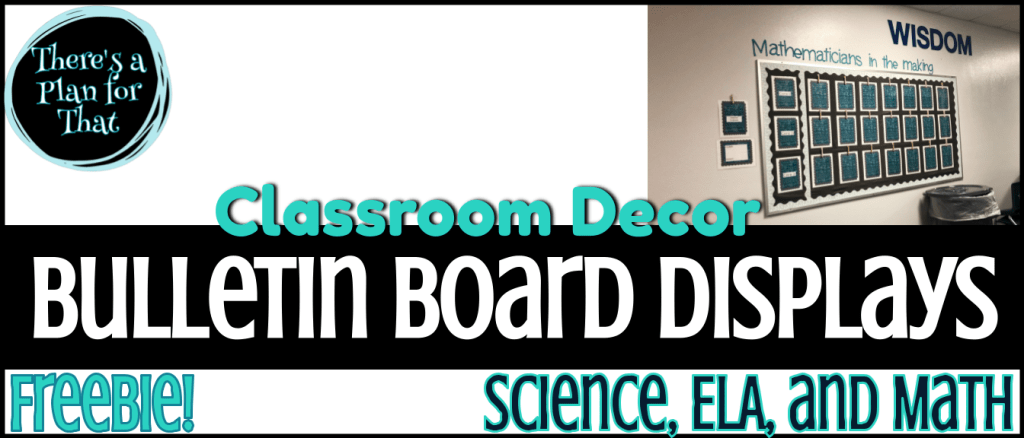
Another pain point in planning how you store items like letters and borders is the bulletin board. (If you’re looking for beautiful, easy-to-store bulletin board decor, I’ve got you covered! Check out the blog post and join my email list for your printable freebie access!)
- Managing your inventory (how many do you need?)
Do you have three boxes of those pens? PURGE! This is your time to be selective. Please review your items and reduce them to the space that makes sense. My first classroom came with enough red pens to fill three plastic shoeboxes. And over half of them didn’t even work. I, at best, needed one box full and a plan for how they would be utilized to justify keeping even that many.
Remember that if your school sends out a supply list, you may need to leave space for specific items coming in, like tissues or lined paper. So you want to be picky with what things you intend to store to guarantee you have enough space for everything.
- Container method (let your bins be the bad guy)
I had a particularly difficult time going through arts and crafts supplies needed for holiday parties, end-of-year celebrations, science and math labs, and S.T.E.M. activities. Internally, I believed that if I threw something away, I would need that extra pack of Google eyes for something.
Pick containers to help balance that feeling and allow them to guide you. If you have one craft bin, you need to start choosing which ones to keep when it is overflowing. Keeping the items I had the most supply or knew would cost the most to replace made the most sense when I had to start eliminating things to make them fit.
Another thing to note about your bins is that uniform bins with lids tend to be the most useful because they allow you to use any vertical storage space you have available.
- Time test your stuff.
There may be some items that you really think you’ll use, but that time proves otherwise. For example, there was a poster for a math unit that I was convinced would be great once we reached that point in the year. However, I went a solid three years in a row without even thinking about bringing it out and putting it up when that unit came around. This poster FAILED the test of time and should have been eliminated after that first year of disuse.
- Note to self-place for when you are running low on a needed item.
I’ve found that a small list notepad stuck to the inside of the door with command strips can be very helpful for jotting down items you may be running low on. Otherwise, you risk over purchasing things you think you need when you have a bunch available in your closet the next time you run to the dollar tree.
If I’m refilling my stapler and realize that I have almost no staples left, I go ahead and write staples on my list (the same way you would write down groceries needed on a fridge magnet notepad.) When I am getting ready to go shopping, and I know I need to pick up some materials for my classroom, I grab that page from the top of the notepad with my list and bring it along with me to shop from.
If you’re not a fan of physical pencil and paper lists, you could create a digital list on your phone using the notes option. Either one is equally as efficient; it just depends on your preference.
Consistency and maintenance are the keys to keeping any place organized and user-friendly. This doesn’t mean I expect you to clean your classroom closet from top to bottom every week. Still, it does mean that you take a quick pass and cursory run-through to make sure that you’ve gotten all the things you’ve used back in their proper spaces, and if you see anything that needs to be taken out (especially if you’ve realized it doesn’t work any longer) go ahead and remove that from your space.
Have I missed any strategies you use to help you maintain your storage areas? Let me know in the comments. I’m always on the lookout for more ways to make my space efficient!
If you haven’t already done so, don’t forget to join my email list so that you can receive reminders about new content, your access code for the Free Resource Library, and all of the awesome freebies waiting for you there.
See you next week!

 There's a Plan for That
Leave a comment