
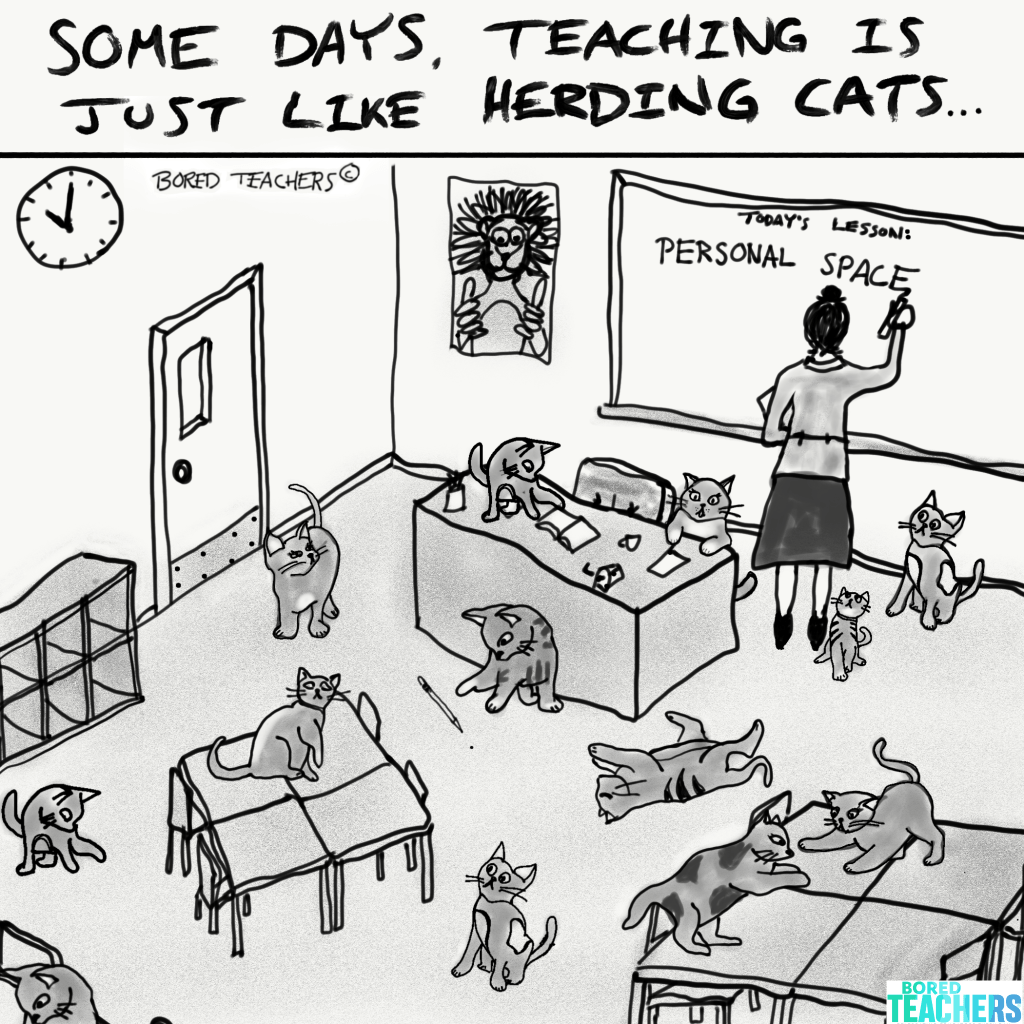
Congratulations—you’ve made it to spring break! Leading a classroom can feel like herding cats at the best of times, but trying to manage it before a school break can feel insane.
Go ahead and have a deep sigh of relief; you’ve done it!
Now that you’re here let’s discuss ways to decompress and reset yourself to make the most of this break.
As a new teacher, I tended to spend all the time leading up to a break, desperate for the time off. But then, once it hit, I would find myself stuck in my classroom or glued to my computer at home, trying to work on that silent to-do list that is always looking when you’re a classroom teacher.
At the end of the break, I would return to work exhausted, not caught up on my work in the slightest, and honestly still feeling frustrated and, at times, resentful of my students because I never actually felt like I had the break that I had wanted so badly. It wasn’t fair to my students because they didn’t tell me to work the whole break.
Self-care and work-life balance are hot topics that rose to infamy during the COVID-19 pandemic. They have been thrown around so often in educational circles that they have become jokes.
It’s hard to believe that your workplace wants you to have self-care as a priority when they tend to add to your plate rather than take a load off your back.
Self-care, however, is vital to your success as a teacher. It’s true what they say: You can’t pour from an empty cup.
Those kiddos in your classroom need you, but they need the best version of you you can provide, which means you have to take care of your needs.
Let’s talk today about ways to put ourselves first during this spring break and return to the classroom refreshed and ready to hit the ground running and finish the school year strong.
- Make a plan for your classroom before leaving for spring break.
Now, I know this seems counterintuitive. I just told you this post will be all about not thinking about your classroom, and here I am telling you to plan something for your classroom.
Let me explain: as much as we would like to preach, turn it off, shut it down, and only think about something once we come back from break, the panic of showing up the day after break, having zero copies ready, no lesson plans to refer to, and a classroom full of excited kids is enough to break even the strongest teacher.
If our goal during the break is to relax, we want to ensure that we are setting ourselves up for success when we return, not relaxing to our detriment.
BEFORE you go home for the break, take a moment to create a rough plan of what needs to be done.
- You know that lesson plans are a given.
- If any photocopies of papers need to be made, when will you make them?
- Do you want to make any changes to your seating chart?
- That pile of papers that are all waiting to be graded? Pick one or two to score and enter the grade book. Stamp the rest and set them in the to-be-filed section to send back home to students. (If you’re curious about an efficient system for managing that, check out this blog post, where I talk more about filing and returning student work!)
- Lastly, were there any parent communication pieces that need to go out? It could be a new email or a pending assignment you want to provide clarity on.
You don’t necessarily need to do all of these things before you walk out of that door to start the break, but you do need to have a plan for them. Could you devote one morning or afternoon where you come in and get your copies done and the seating chart arranged? I wouldn’t do more than a MAX of 3 hours over the break where you go in and tie up odds and ends.
Having this plan means you don’t spend the rest of your break with the stress and looming anxiety of all these unknowns pressuring you.
- Unplugging from school electronics
There is no worse feeling than getting an angry parent email on the first day of your break. Talk about deterrents to relaxing. My mental health NEEDS me to take a moment where I don’t check my emails or the school messaging apps and communicate with parents. To facilitate this, I always send out one mass communication message at the start of the break (over email, Remind 101, Bloomz, or any other communication area your school utilizes.) In this message, I would say:
Hello, Parents and Guardians,
I hope this message finds you well. As we embark on spring break, I wish you and your scholars a restful and refreshing break. We all deserve time to unwind and return, ready to tackle this school year’s final stretch.
I understand that communication is essential to you. I value your time and always strive to respond promptly to parent communication. However, please note that during this break, I will be unable to respond to any messages that may be sent. I will check them and respond to them once school has resumed.
I appreciate your understanding. I look forward to seeing everyone back bright and early on the (insert date here). Please stay safe and enjoy the break!
Best regards,
(Teacher’s name)
Feel free to use this message template above or write your own. You could add a section about ways they can keep reviewing concepts with their kids over the break, but honestly, I tend to believe that the kids need as much of a break from academics as we need from school to be ready to end the year strong, so I normally leave that out.
- Make a bucket list
It can be easy to lose your sense of self as you teach, especially in the beginning, because you spend so much free time doing things for work and not for your own pleasure. Take a few minutes to brainstorm a list of things that you either have been interested in doing or used to do that you enjoyed and write them all down.
There are no right or wrong answers here, but this list can make a great launching point for planning fun activities for yourself during this break.
This list will look very different for each person, especially if you are more introverted or extroverted.
Now that you have a list generated, see if you can narrow it down to 4 activities you would like to integrate into your break.
I make this list with two activities to engage and two to relax.
For example, I love to go to outdoor flea markets with my daughter. So, I would look up the ones in the area and see if I could find one to attend. This activity, however, while it is a fun adventure, isn’t particularly relaxing. I wouldn’t try to plan four activities like this to fit into my break because then I’m just running myself ragged, trying to squeeze in all the adventures, and I’m still not allowing my body a chance to rest and recover.
Can you picture a vacation like this that you may have gone on that is so itinerary-heavy that you come home more exhausted than when you initially left?
Try to plan some relaxing activities as well.
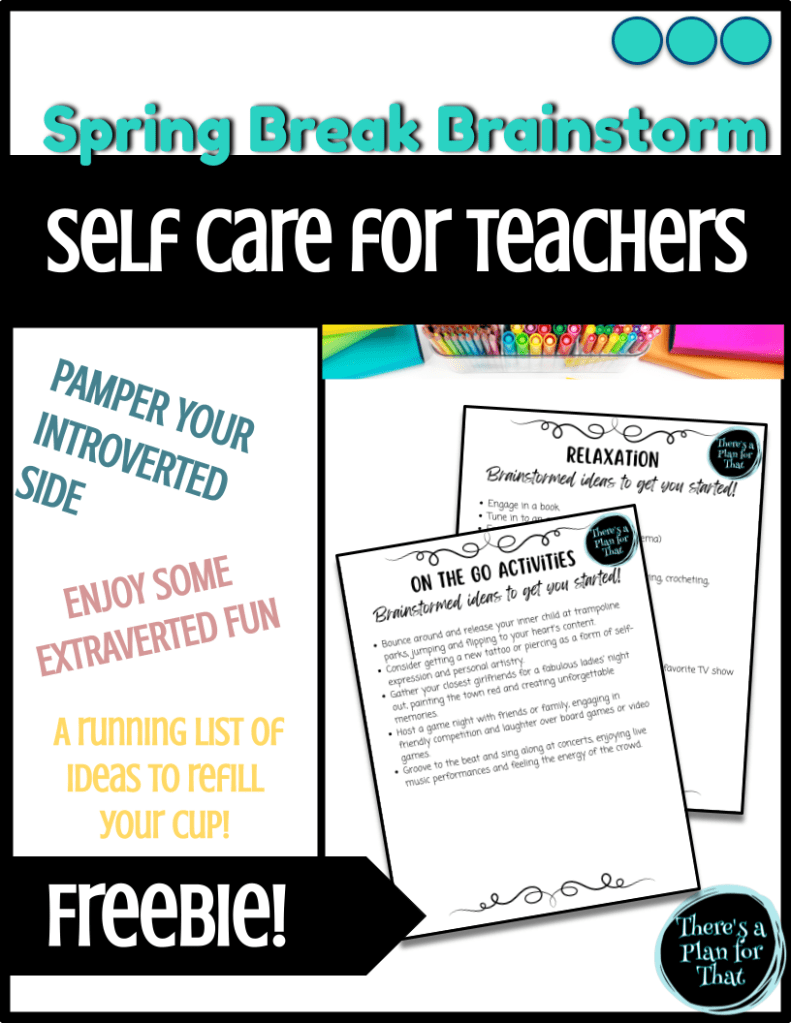
Are you struggling to come up with ideas? Don’t worry—I’ve created an excellent starter list that you can download from my Free Resource Library. You’ll need to join my email list to get exclusive access to this freebie.
- Closet Cleanout
Clutter has been linked to more significant instances of stress, anxiety, and depression. Don’t believe me? Look it up! Google M.D. has never steered us wrong before, right? (Just kidding!) But in all seriousness, clutter has been linked to higher cortisol levels in your system (which is your stress hormone). While you have some time at home, it may be helpful to take some time and declutter some of the items in your house.
When thinking about decluttering, it can be helpful to think about this like the layers of an onion: the deeper you declutter, the further into the layers you go. For this “closet cleanout,” which is more of a household cleanout, you should be focused on the broad surface levels. Are there items that constantly need to be put in the right place or left out on tables, counters, and floors? Take some time to reflect on why, often, clutter ends up out because we either don’t have an efficient system to manage that item (like the mail pile) or because there isn’t a home for that item. This may be because you haven’t picked a home out yet or because there are too many other things in the area, but you would have chosen to keep that there isn’t room.
As you work through some of your things, try to clear out spots to store and fix those pain points. If a pan lives on your counter because the cabinet is too full of Tupperware to fit it, let’s sort and work through the amount of Tupperware you have and pair it down until there is a space for the pan. Allow your cabinets or containers to be the bad guys in this situation. You would love to keep everything, but it simply doesn’t fit comfortably in the container, so it must go elsewhere.
- Spring Cleaning
Now that you’ve taken the time to purge some of those clutter pain points let’s clean your house to make it feel fresher. There is something nice about knowing you will be coming home from work after break to a house that isn’t full of dust and grimy floors. It can be easy for small maintenance tasks to fall to the wayside during a busy school year, so using this time to catch up on those can be helpful.
I’ve always found that one new piece of seasonal decor can be a great morale booster after cleaning a space; it helps add to the positive energy a fresh house can give you.
- Eat your favorite meal.
There’s nothing like enjoying a favorite meal to help you destress. Pair that with your favorite drink or dessert, and you’ll have a match from heaven.
These are a few ways to help yourself unwind and enjoy your time off during spring break. Remember, giving yourself a brief plan for your return to school will allow you to disconnect from school and recharge your own batteries, so to speak.
I would love to hear any plans you anticipate to fill your cup during the break this year; comment on them below! Are there any relaxation ideas I missed?
Remember, I have that freebie ready for you in the free resource library. Use the link below to join my email list for exclusive access to that document and much more!

 There's a Plan for That
Leave a comment