
Let me paint a picture for you: it’s time for your students to go to specials, and you start to line them up. You give the direction to line up, and what you see are students running to get in line; one student has tripped over a chair that someone forgot to push in, the room is loud and chaotic, and to say that your students are standing in a “line” is generous. It’s more like three attempted lines that turn into a mob somewhere in the middle. But you’re so tired of trying to correct the issue, and your kids will be late. So you huff and start down the hallway anyway. As you walk, you’re lecturing your kids about how to walk, trying to get the students to stop talking, and reminding scholars to keep their hands to themselves.
I get it; I’ve been there. We’ve all been there.
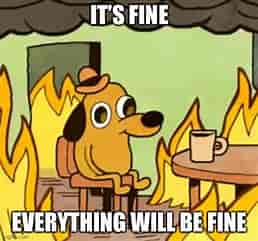
One of the quickest things you will notice when working in the classroom is how easy it is to spend time on transitions. Ultimately, the time you spend managing a transition is time you’re not spending teaching. It’s time your students are not spending practicing the skills they have been taught that day.
Figuring out how to facilitate effective transitions was my Achilles heel—the bane of my existence as a new teacher. I knew the importance of it; you didn’t have to sell me on the need for smooth transitions. But for the life of me, I couldn’t figure out how to master it. I frequently felt overwhelmed by the chaos of transitions and powerless to correct misbehaviors.
I would ask the class to sit down and try it again, but this cycle could take up to 10 minutes to work. And by that point, we were late. When you only have a 25-minute lunch block and other classes are scheduled directly after yours to get your food, you don’t have 10 minutes to practice lining up.
Today I want to share with you a few tried and true strategies that I have implemented over the years to make transitions more efficient.
Line up students in smaller amounts:
Managing an entire class of moving pieces at one time can take a lot of work to keep track of. Lining up five students at a time is much easier. It also makes it more efficient to identify which students are struggling with the procedure. Calling one table group to line up or one row at a time can be helpful. If one group fails to line up how you expect them to, ask them to sit back down and move on to the next group. This isn’t the time to have a big powerplay moment. You shouldn’t need to break down into a massive lecture about what you expect and immediately waste the rest of the class’s time trying to correct the behaviors on the stop. If a group you called to line up doesn’t do it properly, you want to:
- Tell them to sit back down.
- Quickly and concisely identify what they did wrong with how they lined up. Were they talking, not pushing in chairs, or running? Point out the focus area. If they did one element well, take a moment to reaffirm that good behavior.
- Step 2 may sound like, “Table 3, I loved how quietly you were lining up, but we forgot the expectations for pushing in our chairs to keep the ground safe for people to walk by. Please sit back down and wait for your next chance.”
- Ask the next group to line up. I would take a quick moment to reiterate your expectation for the transition. “Remember, when we line up, I expect everyone to push in their chairs, move quickly to their spots in line, and do so without conversion. Let’s see how well Table 4 can meet these expectations.”
Remember, the goal is to cut out powerplay moments. Doing it in smaller pieces makes it easier to identify and hand out quick praise points. Students are motivated by praise; they like to hear good things about things they have done well.
The 3 Q’s
This strategy is really 2 Q’s and a C, but it sounds better as 3 Q’s right? 😂
Having an incentive, like a marble jar, can be very helpful in facilitating transitions in your classroom. The students want to fill the jar with marbles to enjoy a reward. The marbles are given out based on smooth transitions. This idea is familiar, except when I first tried a traditional incentive jar, it failed to motivate my students. So they never earned the marbles, and consequently felt discouraged and quickly stopped trying to earn them.
One crucial factor in an incentive jar’s effectiveness is student buy-in. The reward they are working towards needs to be something they are excited about. I preferred letting the kids share their ideas on the whiteboard. I wrote down all of the do-able ideas and allowed them to vote on the ideas they wanted; they could only vote on one thing. This typically narrowed the list down to two or three ideas. Once the ideas are whittled down, you take a new vote, this time only between the remaining options. The option with the most is your first incentive; the runner-up option would be your next incentive for the next time your class fills up the jar.
Now, back to where those Qs (and C) come in. When the students do a transition, like lining up, you are watching to give out marbles to fill your jar. Originally, I was giving a marble for Quickly, a marble for Quietly, and a third marble if they managed to do both of those at the same time.
When I only expected quick and quiet, I found that a ton of students were running and racing unsafely around the room in an effort to be quick. This was the opposite of what I wanted, an EFFECTIVE transition, because they were so unsafe.
To eliminate this issue, I added a third category- Calm.
When transitioning, the students needed to be calm, quick, and quiet to earn a total of 4 marbles.
This is also an easy way to cut out a powerplay, and lecture given to the students. Once they had transitioned, I would ask them to vote on their thumbs for each category. If the students voted accurately for all three questions, I often award a bonus honesty marble to help encourage self-reflection and improvement. (One possible honesty marble, not a marble per question). This honesty marble didn’t happen every time, but I found it especially powerful when the transition had gone well, and the students were willing to admit to that even when it meant they weren’t going to get a marble put in the jar.
Ultimately, the teacher has the final vote on whether the marble is earned in each category and if the students need to be more honest about the thumb votes.
Assigned spots in line
Having assigned spots in a line or assigned places to go to when working around the room can be very helpful because it helps cut out some of the inclination for students to make unwise choices. For example, I had two students I will refer to as P and K for privacy’s sake, but P and K were best buds. I mean the best of buddies; they wanted to do everything together all of the time, so of course, walking in line beside each other was something they wanted to do.
However, while being sweet kids, my dear P and K were also big goofballs who constantly encouraged each other to make unwise choices when in line. They struggled with impulse control individually, but together, it was a recipe for disaster.
Having assigned places in line, which intentionally were not near each other, went a long way in mitigating many of their impulsive behaviors in line. The nice part was that because everyone had an assigned spot, I also wasn’t specifically calling the two of them out.
These assigned line places weren’t used or stated to be a punishment; it was just the established expectation.
Having expectations like this can also be helpful if you are absent and someone else needs to step in and run the class. The students know how to line up in order where they are going to be set up to make their most intelligent choices. This is a great way to set your scholars up for success even when their routine is off because you aren’t there that day.
Guided Talking
Have a particularly chatty class? Sometimes, it may be easier to go with it than find the tide on that one. I’ve found that teaching my students songs or chants of educational value and having them practice while lining up or transitioning from one station in my room to another can be super beneficial.
Some of the things my students have used to recite to themselves during transitions are multiples counting songs (like singing your 4’s song), grammar chants and songs, and science songs like songs about water cycles. If you’ve got a younger crowd, maybe your class is going to sing about the days of the week, the months of the year, or even the continents on Earth.
If you’re waiting in the hallway to finish up a bathroom break, this may look like a math fact review, where you ask the students in the hallway to answer a math fact. It could be a quick review of colors, “If you mix blue and red, what color do you make?” Or it could be a time to quiz students on science vocabulary. Remember, bored kids are the most likely to be your behavior kids, so helping keep them engaged during downtime will be one of your most efficient strategies.
Not only does this fill the need for chatter, but it is a great quick review of academic content without taking up extra time during your day. It also looks great during an observation from your administration if you’re looking to score some brownie points! 😉
I’ve discussed four strategies that can be helpful for your transitions today. My experience has been that using a mix of smaller portions of students moving at a time, the 3 Qs, assigned spots, and guided talking can be the most helpful. This gives you a variety of tools in your metaphorical teaching toolbox to help positively redirect your students’ behaviors during transitions and keep your time efficient.
Please keep in mind that the key to any good strategy is consistency. If you pick a strategy and change your mind multiple times about when to reinforce it, you’re breaking your students’ trust in you and the strategy. Why should a student strive to do something well when you’ve shown that you’re okay with accepting subpar behaviors?
Please take a moment before signing off today to leave a quick comment about what strategies you’ve found to be most helpful in streamlining your classroom transitions. I’ll catch up with you next week!

 There's a Plan for That
Leave a comment