
Take a moment to imagine your most recent day of professional development. Not the very beginning of that day when you arrived with fresh, inky pens and an extra-large espresso. Or the moment when you rolled in, a tad late, having “over-slept” and quietly sneaking around in the back of the room, hoping to snag the last of those sugary donuts from the “free breakfast” stash (IYKYK!).
No, picture the end of the third session of your day when you felt that the speaker just needed to pause for ONE minute so you could regain your focus. Perhaps you felt the urge to take a stroll down the hallway to the vending machines or the bathroom. Maybe you considered standing behind your chair, engaging in a conversation with your tablemate. Either way, we all remember that feeling of needing a break after a long day of information being thrown at us.
But can I let you in on a secret?
We subject our students to this EVERY SINGLE DAY.

And we’re adults who are supposed to be able to handle it—sitting for eight hours, absorbing crucial content to apply in our classrooms, and so on. Recognizing how challenging this can be for us, it sparks a new level of empathy for our students. It also emphasizes the importance of incorporating breaks into our school day to help them maintain their focus during lessons.
As an upper elementary teacher, when I think of brain breaks, I think of ‘GoNoodle‘ (kudos to any teachers who heard—GET MOVING!—in their heads as they read that!🤣).
The issue is that, over time, GoNoodle alone isn’t sufficient as the sole brain break option. Depending on the group of students, my experience as a teacher, and the quality of my classroom management, I found that GoNoodle left some students disengaged. They opted to engage in off-task behaviors during brain breaks, like running around the room or roughhousing with classmates. When a brain break resulted in me having to fill out injury report forms, I, as a teacher, wanted to eliminate them forever (Full transparency: this was during my early teaching days when classroom management was a challenge, but thankfully, it wasn’t a permanent stage!).
What turned the game around for me regarding brain breaks was two-fold:
First, establishing clear expectations! I don’t mean the expectations set on the first day of school, where you discuss them once and hope they stick. I mean continuously reinforcing expectations. Each time you introduce a brain break, you review how you expect the children to move. Are they to remain at their seats? Are they allowed to walk to a friend’s desk? Can they only stay within their table area? Review noise expectations. Are they supposed to sing along, chat with their neighbors? What’s the maximum acceptable noise level, and how will they know if they’ve exceeded it before their break is forfeited due to unruly behavior?
By reiterating norms and expectations before each brain break and, if possible, providing visual representations of what you expect, you set your students up for success. And you, as the teacher, get a breather as well.
The other game-changer in your brain break routine is recognizing that diversity is the spice of life. Not every brain break needs to be or should be GoNoodle. Does this mean we dislike GoNoodle? Absolutely not; I think they’re fantastic, and I appreciate the brain breaks they offer. However, if we broaden our perspective on what constitutes a “brain break” – essentially anything that breaks up the monotony of academic work all day – we’ll discover a multitude of brain break options that take varying amounts of time.
I’ve found it helpful to categorize brain breaks into different types:
- Emergency Brain Breaks: These are spontaneous brain breaks when your students are struggling to focus during a lesson, whether it’s fidgeting, talking, or absentmindedly staring. You need a quick remedy to infuse life back into the room and refocus their energy on the lesson.
- One of my favorite emergency brain breaks requires zero prep, tech, or materials. It’s called “Stand up, Sit down.” You don’t explain anything; you simply announce, “Stand up!” Then, once the kids are standing, you say, “Sit down.” Repeat this for a few rounds, varying the speed of your commands and throwing in fun variations like “stand on one foot” or “touch your right elbow.” The goal is to catch your students off guard, get their blood pumping, and transition back into your lesson smoothly, as they haven’t roamed around the room. Typically, I would conclude this type of brain break with a line like, “Now that we’re all awake and excited to focus, let’s get back to our lesson. Remember my expectation is that we are…” (fill in the blank with the behaviors that prompted the need for the emergency brain break in the first place).
- Mindfulness Brain Breaks: Similar to emergency brain breaks, there are times when students may exhibit behavior that’s a bit out of hand or they’re not interacting well with each other or authority figures. Our immediate reaction might be to launch into a lecture, but providing structured mindfulness activities for students before engaging in a class discussion often results in a more productive and less power-struggle-focused outcome.
- If you’re looking for mindfulness brain break ideas, GoNoodle has some great, easy-to-use videos. I’ve also included several guided mindfulness activities in my free resource library, along with examples and options for other types of brain breaks mentioned in this blog.

- Short Scheduled Brain Breaks: These are your standard brain breaks that you plan into your lessons, and they should come in various forms to keep students engaged. They could be GoNoodle videos, a quick game of rock-paper-scissors, a walk around the school or playground, or a game of red light-green light. A 30-second chat with a neighbor on a topic of your choice can also serve as a short brain break. LucidSoftware, an account on YouTube, creates short videos with great entertainment value that don’t take much time. (Again, the list could go on, and my free resource includes even more ideas than those provided above.)
- Short brain breaks are the ones students tend to anticipate most because they’re consistent. Therefore, it’s crucial to add variety to avoid boredom. We want to engage students and help them refocus their energy productively, not merely add another item to their plate to sit through. When planning brain breaks, consider different options.
If you’re looking for some ready-to-go brain breaks, feel free to check out these two great brain break options which I have for sale in my TPT store.
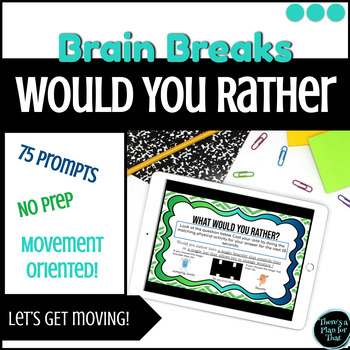
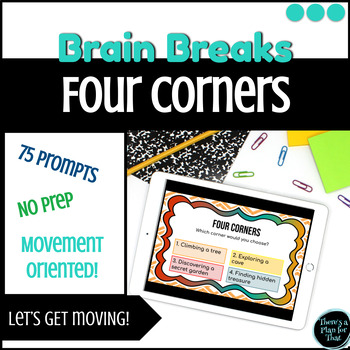
These games have always been winners, and I’ve taken all of the prep work and thought out of it for you! Just download and go. 🙂
- Long Brain Breaks: The last category is long brain breaks, which are less frequently used due to time constraints. However, they can be handy for indoor recess, holidays, or days when your schedule is disrupted, like during an awards ceremony, half-days, or field trips. Long brain breaks provide structure while using up a substantial amount of time and can boost class morale and teamwork or serve as an incentive for achieving a goal.
- When I mention long brain breaks, ideas that come to mind include playing “SPARKLE” (I elaborate on this in the freebie), watching “I Spy Fitness” videos on YouTube (students particularly enjoyed the Among Us and Fortnite versions, but this may change over time. PE With Coach Smith was a go-to youtuber for me for this type of content) or following guided drawing videos on YouTube.
The key takeaways to remember:
Establish Expectations: How crucial it is to establish expectations before any form of a brain break.
Scheduled Short Brain Breaks: The importance of scheduling and planning short brain breaks into your lessons and having some variety in the types of brain breaks you choose.
Multiple Brain Break Options: Having several different brain break options that you can quickly implement or access as needed at any given time.
Now, teachers, I know you’re BUSY! I get it. The fact that you’ve made it this far is quite an achievement. Let me take a little something off your plate to help with your brain break planning. Click THIS LINK or the image below to join my email list and gain access to the free resource library. There, you can download your own copy of brain break ideas and resources to have at your disposal. (If you’re already on my email list, don’t forget to use the code provided in the welcome link. Visit the free resource library tab above and grab your copy!)

 There's a Plan for That
Leave a comment